
Why I Finally Deleted My Storage Unit Inventory Spreadsheet
Still tracking storage unit inventory in a spreadsheet? Here’s why I started building LockerLedger to track units, inventory, expenses, sales, and profit in one place.
By Jay from LockerLedger
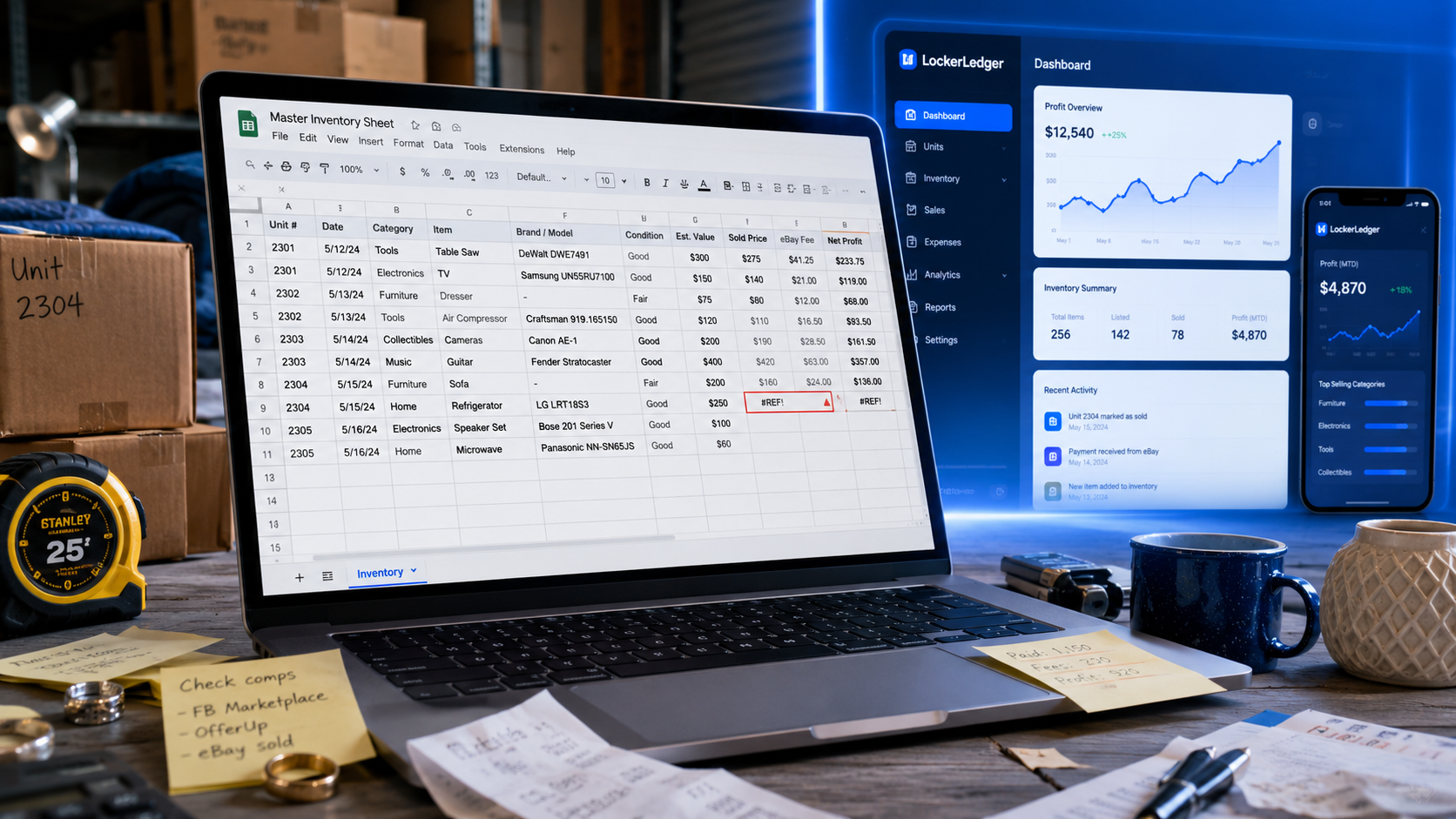
If you’ve been flipping storage units for a while, you probably know the routine.
You win the bid. You schedule the pickup. You haul everything home. Then the real work starts.
Now you’re standing in your garage, driveway, storage space, or kitchen surrounded by boxes, bags, tools, furniture, electronics, and random mystery items. Some of it might be worth money. Some of it might be trash. Some of it you’re not even sure about yet.
So you open up your spreadsheet. Maybe it’s called Master_Inventory_Final.xlsx. Or maybe, if you’re like me, it eventually becomes Master_Inventory_Final_V2_REAL_FINAL.xlsx.
Then the typing starts.
- Item name
- Unit number
- Estimated value
- Purchase cost
- Condition
- Sale price
- Platform
- Fees
- Profit
And if one formula breaks, suddenly your profit tracker is showing a #REF! error right when you need it most.
The spreadsheet worked — until it didn’t
For a while, I thought my spreadsheet was enough.
I had columns for everything: date bought, unit ID, item description, estimated resale value, actual sale price, expenses, and profit. On paper, it made sense.
The problem was real life.
Storage unit flipping is not clean and organized like a warehouse. A unit is usually a chaotic mix of everything: furniture, tools, clothes, collectibles, boxes with no labels, broken items, mystery bags, and a few things that might make the whole unit worth it.
Trying to force all of that into a spreadsheet after a long day of cleaning out a unit became exhausting.
The breaking point for me wasn’t losing money on a bad unit. It was losing time.
After clearing a unit, I would spend hours trying to enter everything into the computer. By the time I was done typing, organizing, fixing formulas, and trying to remember which item came from which unit, I was too tired to actually list anything for sale.
The inventory was technically tracked, but it was still sitting there. And sitting inventory does not make money.
The real problem was the gap
The more I flipped, the more I realized the issue was not just inventory tracking.
The real problem was the gap between the physical mess and the digital numbers.
In real life, you are moving fast. You are unloading boxes, sorting items, deciding what to keep, what to list, what to donate, and what to throw away. But later, the spreadsheet wants everything typed perfectly.
That gap is where things get lost:
- Which unit did this item come from?
- How much did I spend on that unit?
- Did I already list this?
- Did this item sell?
- Did I count the fuel, dump run, supplies, or platform fees?
- Did this unit actually make a profit?
That last question is the big one. Finding cool stuff is great, but if you are flipping units as a business or side hustle, you need to know whether the unit actually made money.
Looking for software was frustrating
I started looking around for software that could help.
The problem was that most inventory tools seemed built for traditional businesses, warehouses, retail stores, or large operations with clean product catalogs.
That is not what a storage unit looks like.
A storage unit might have a dresser, three fishing rods, old DVDs, tools, a broken printer, a box of Pokémon cards, a microwave, five bags of clothes, and one item you have to research because you have no idea what it is.
I did not need a giant warehouse system. I needed something built around how storage unit flippers actually work.
Something that could connect the unit, the items, the photos, the expenses, the sales, and the profit.
The aha moment
The aha moment came when I stopped thinking about inventory as typing. I started thinking about inventory as capturing.
When you are cleaning out a unit, you already have your phone. You are already taking photos. You are already sorting through items. So why should the tracking process start with typing everything into a spreadsheet later?
That is what pushed me toward building LockerLedger.
The goal is simple: track the storage unit flip from bid to profit.
That means keeping the important pieces together:
- Units you are watching, bidding on, won, or cleaned out
- Pickup deadlines and facility details
- Inventory tied to each unit
- Item photos, notes, condition, and estimated value
- Expenses like auction fees, fuel, dump runs, supplies, labor, and refunds
- Sales, platform fees, and actual profit
- Reports that help show whether the flip was worth it
One of the features I’m most excited about is using AI scanning to make inventory faster. Instead of typing every item from scratch, the idea is to snap a photo, let the app help identify or categorize the item, and then save it directly into inventory.
That does not replace good judgment. You still decide what something is worth, where to sell it, and whether it is worth keeping. But it can remove a lot of the boring data entry.
From manual tracking to a better workflow
I built LockerLedger because I got tired of trying to run a storage flipping workflow through a spreadsheet that was never really designed for it.
Spreadsheets can work in the beginning. They are flexible. They are familiar. They are free or cheap. But once you start tracking multiple units, dozens or hundreds of items, expenses, sales, photos, and profit, things can get messy fast.
LockerLedger is my attempt to build the tool I wish I had when I started getting serious about tracking this properly.
I am not building it as a giant corporate inventory system. I am building it as a practical tool for storage auction buyers, resellers, and flippers who want to know where their money is going and what their units are actually earning.
What comes next
LockerLedger is still being polished, and I’m getting it ready for early demos.
The goal right now is not to pretend it is perfect. The goal is to get it in front of real storage unit flippers and resellers, watch how they use it, and keep improving it around real workflows.
If you are still wrestling with your own version of a master inventory spreadsheet, I get it. It works — until it doesn’t.
And when it stops working, the real cost is not just bad formulas. It is lost time, missed listings, forgotten expenses, and not knowing your real profit.
That is the problem LockerLedger is being built to solve.
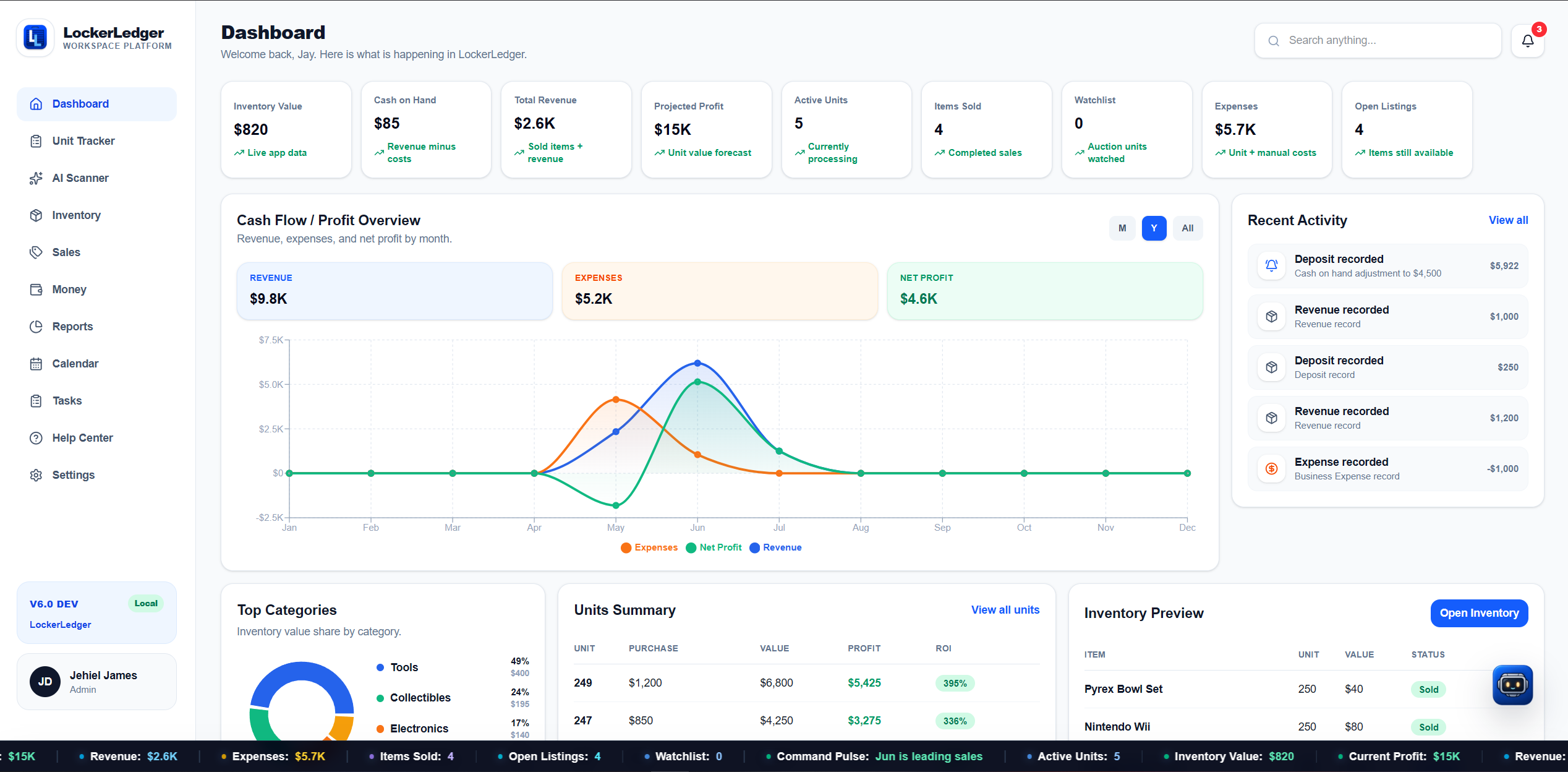
Early Demo Access
Want to track your next storage unit from bid to profit?
LockerLedger early demos are opening soon for storage auction buyers, resellers, and flippers who want a cleaner way to manage units, inventory, expenses, sales, and profit.
Request Early Demo